


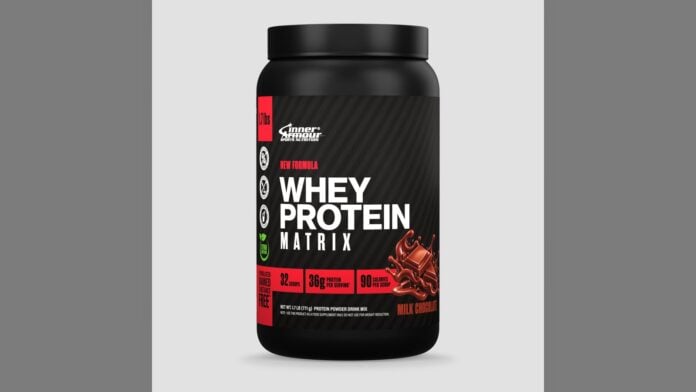
Whey protein begins as a by-product. When milk is made into cheese, the curds are separated and what remains is liquid whey: mostly water, with lactose, minerals, fat and a small amount of protein. Turning that into a powder with 70 to 90 percent protein is mainly a filtration problem.
Inner Armour, a sports nutrition company in Kelowna, British Columbia, uses whey concentrated by ultrafiltration, and says the process raises protein content without adding anything to it.
How the membrane works
Ultrafiltration pushes liquid whey under pressure across a membrane with extremely fine pores. Protein molecules are relatively large, so they cannot pass through. Water, lactose and dissolved minerals are smaller, so they can. What stays on the protein side becomes progressively more concentrated.
There is no heat-intensive chemistry involved, which helps preserve the protein’s structure. Because much of the lactose is carried away, the resulting protein is naturally low in sugar. Further filtration steps produce whey isolate, which has even less fat and lactose.
From concentrate to product
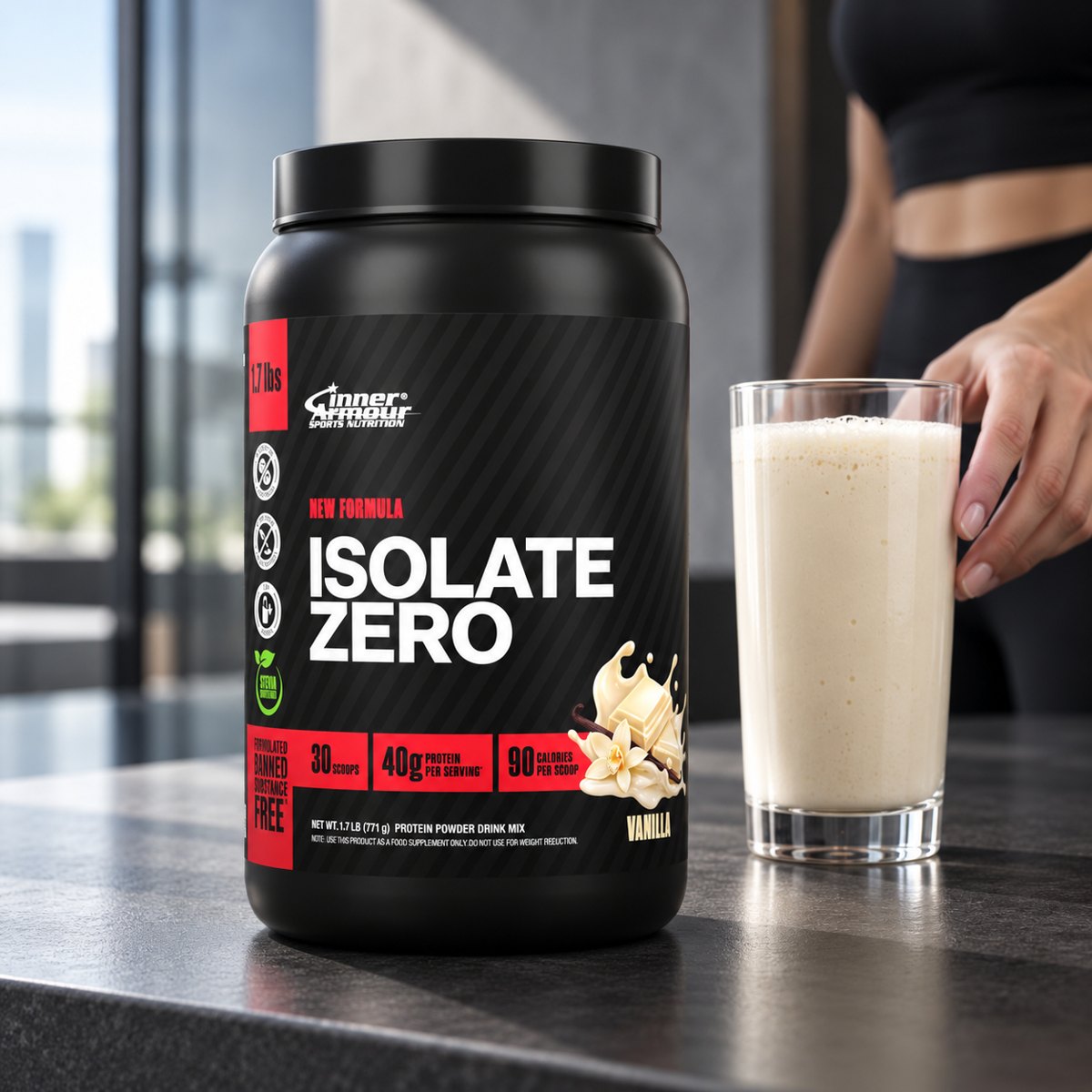
Inner Armour sources Canadian milk and whey protein, including whey from Saputo, and builds two products on it. Isolate Zero is the leaner of the two, with 40 grams of protein in a two-scoop serving and 90 calories per scoop. Whey Protein Matrix combines several protein sources so that amino acids are released over a longer period.
Both products were reformulated this year. The company replaced sucralose with stevia, a sweetener extracted from the leaves of Stevia rebaudiana, and removed artificial colours and flavours. Final products are formulated, produced and packaged in Inner Armour’s own certified GMP facility.
Why it matters for muscle
Whey is popular with athletes for a reason. It is rich in leucine, the amino acid most closely tied to switching on muscle protein synthesis, and it digests quickly. A filtered whey delivers that protein with fewer extra calories, which is useful for anyone trying to build muscle without adding fat.
The science of the filter is simple, but the quality of the result still depends on the milk going in. That is why Inner Armour points to Canada’s national dairy standards, including testing for antibiotic residues, as the starting point for its formulas.
The company, led by sports nutrition veteran Kevin McIsaac, relaunched its line with new packaging on October 1, 2026.

