


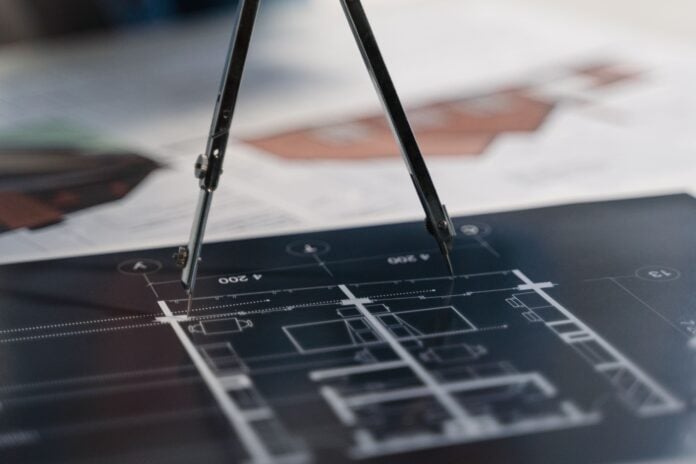
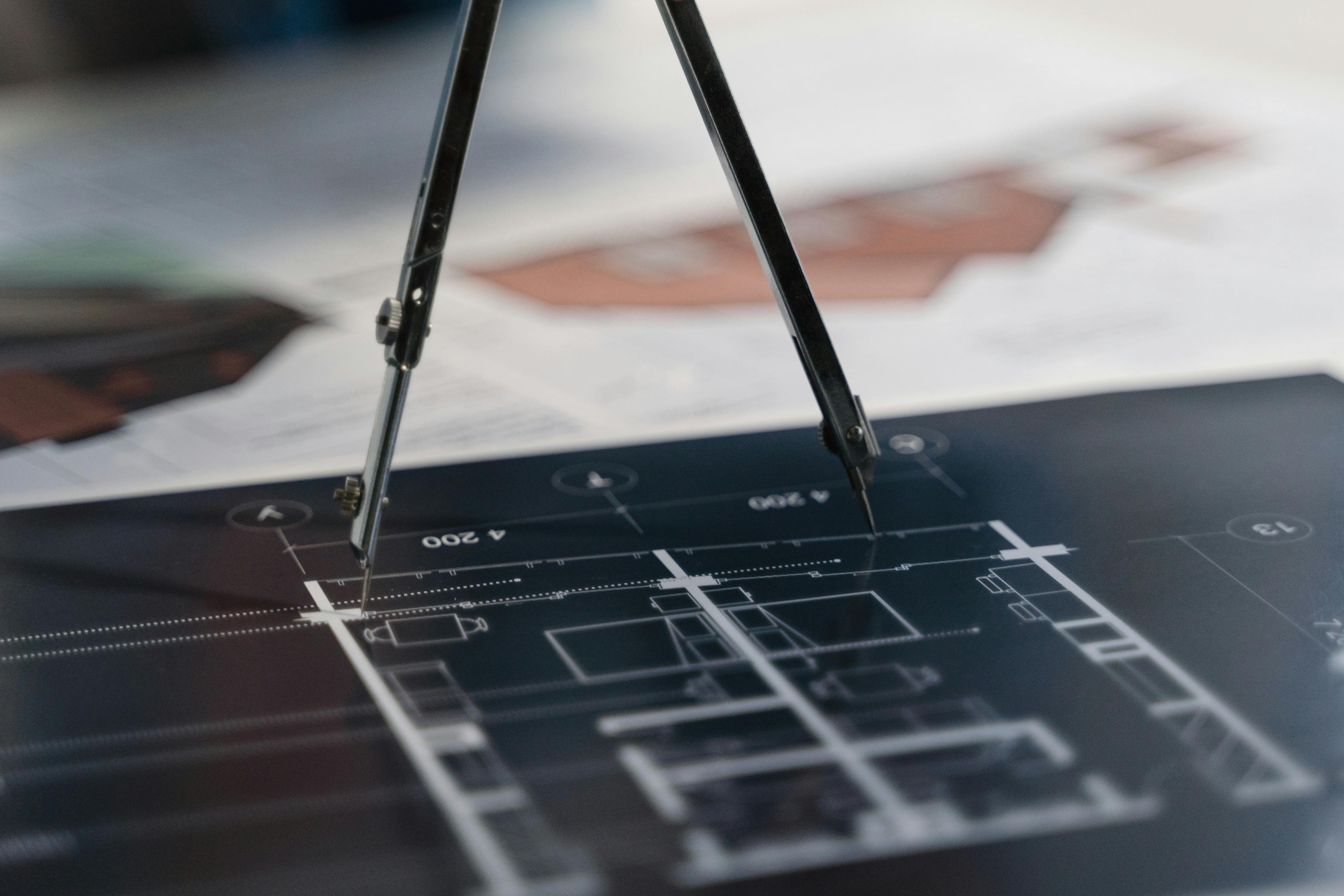
A patent drawing is a technical illustration that shows what an invention looks like and how its parts relate. For most patent applications the USPTO requires one. The rule, set out in the USPTO Manual of Patent Examining Procedure and 37 CFR 1.81, is that a drawing must be filed where it is necessary for understanding the subject matter. In practice that covers nearly every device and product. The drawing is not decoration. It is part of the legal record that defines the invention.
What the USPTO actually requires
The drawing standards live in 37 CFR 1.84, and they are specific. Drawings must be in black ink on white paper, or in the accepted format for electronic filing. Sheets must use one of two sizes, either 21.0 by 29.7 centimeters (A4) or 21.6 by 27.9 centimeters (8.5 by 11 inches). Margins are fixed. Each figure must be numbered, and every feature mentioned in the written description must appear in the drawing with a matching reference number.
These rules exist so an examiner, and later the public, can read the invention without ambiguity. A drawing that omits a claimed feature, or labels it inconsistently, can draw an objection and slow the application.
Line types carry meaning
In patent drawings, solid lines and broken lines say different things. Solid lines show what is claimed. Broken or dashed lines show environment or context that is not part of the claim. In design patent practice, described in the USPTO’s design examination guidance, this distinction decides the legal scope of protection. Getting it wrong can narrow or widen a claim by accident.
Utility drawings versus design drawings
The two main patent types use drawings differently. A utility patent protects how something works, so its drawings show structure and function: cross-sections, exploded views, flow diagrams, and labeled components. A design patent protects how something looks, so its drawings must capture the appearance from every relevant angle, usually seven views, including front, back, top, bottom, both sides, and a perspective.
Design drawings are the entire claim. There is almost no text describing the design beyond the drawings themselves. That makes the quality and accuracy of the illustration the difference between strong and weak protection.
Why most inventors do not draw these themselves
Patent drawings follow conventions that hand sketches rarely meet. Shading must indicate surface and contour using accepted techniques. Proportions must be consistent across figures. Numbers must align with the specification. A drawing that looks fine to an inventor can still fail the formal requirements.
This is why drawing preparation is usually professional work. Computer-aided design has changed how it gets done. A CAD model of the invention can generate accurate, consistent views, then those views are formatted to meet the rules. Enhance Innovations, an invention design firm founded in 2010 and based in Champlin, Minnesota, builds CAD models as part of its virtual prototype work, which means the same model that shows a product to a manufacturer can also feed formal patent figures. Producing design, engineering, and patent-ready visuals under one roof avoids the handoffs that introduce errors.
What happens if drawings are wrong
The USPTO reviews drawings during examination. Informal drawings can be filed first, but corrected formal drawings must be submitted before a patent issues. If figures do not match the claims, the examiner issues an objection, and the applicant must fix and refile. Each round costs time. The USPTO’s patent basics resources note that drawing and formatting problems are among the routine, avoidable reasons applications stall.
A practical sequence
The drawing comes after the invention is defined, not before. First the invention is described in enough detail to be reproducible. Then a search checks whether it is new. Then, as the application takes shape, the drawings are produced to match the claims being written. Reversing that order, drawing first and defining later, tends to create figures that do not line up with the final claims.
For inventors weighing professional help, the federal small business resources at the Small Business Administration are a sensible starting point for understanding where outside expertise pays off. A patent drawing is a small line item that, done correctly, protects everything else in the application.
This article is educational and is not legal advice. Inventors should confirm current USPTO drawing requirements before filing.

